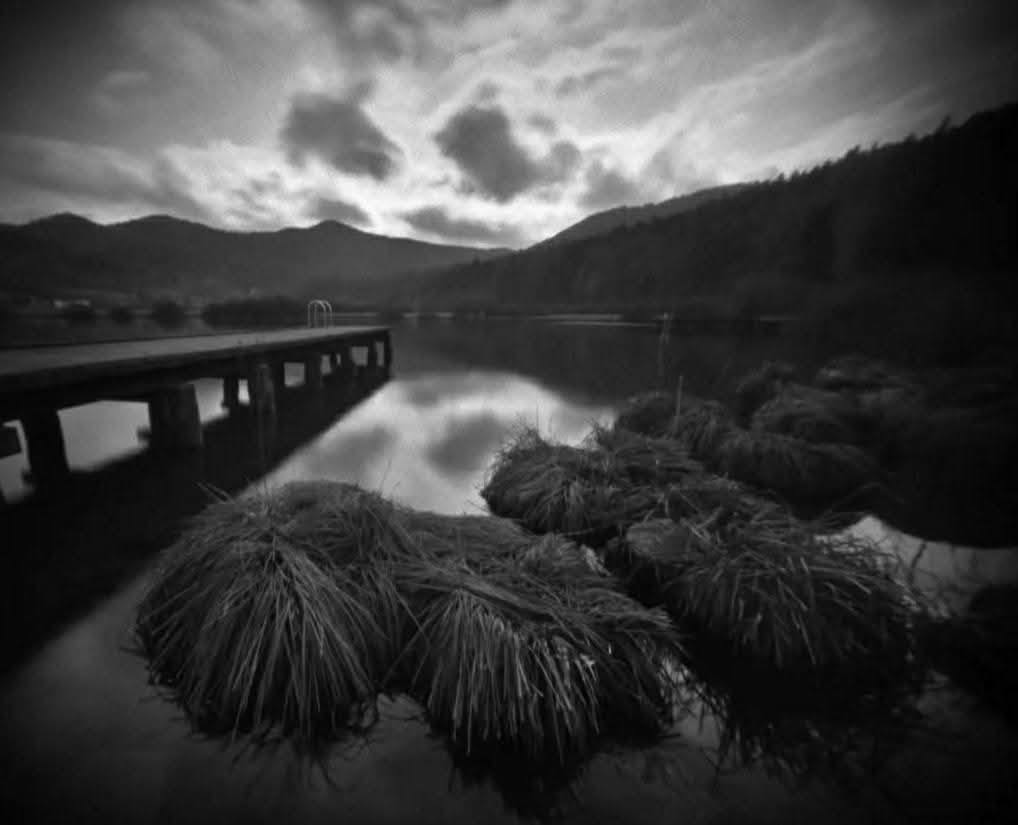
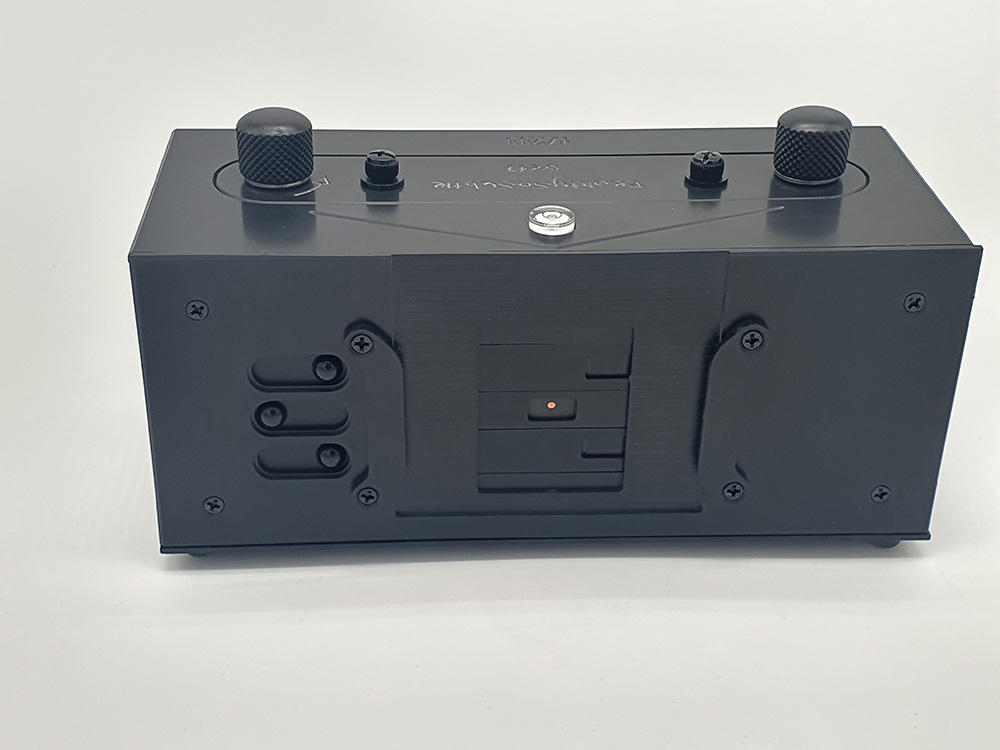
Can you tell us about yourself as an artist?
All I wanted to do when I was at school was to go to art college and learn about colour theory and how to draw better, I was already pretty good at drawing. I would occasionally buy Rolling Stone and I was aware of people like Annie Lebovitz, who I thought was amazing but I wanted to be an illustrator. I got to art school and it was a profound disappointment. Our tutors all seemed to be conceptualists and my interests were seen as reductive. Then a couple of weeks in my dad died suddenly. My already limited interest was curtailed by all the grief and sleeplessness. About
that time they sent us over to the technical college for three sessions in the darkroom. I’d wanted to understand how to print a photograph and that’s exactly what we did. The unexpected bonus was, of all the processes we did at art school, the darkroom was the most exacting and as a result, for three hours a week, I didn’t have the brain space to think about the horrific hole that had opened up in my life. The rest of the foundation year was spent in search of things that gave me some kind of respite from the relentless sadness and inability to escape it through
making things. Instead I found it in the Odeon watching things like Phantasm, Alien and Kentucky Fried Movie, learning to wait for Guinness in the Lamb and Flag and getting high near the cricket ground. At the end of the first year I was invited not to go back for the second.
Why do you work with pinhole cameras?
I got my father’s Praktika SLR as he no longer needed it, and nobody else was all that interested in using it, and started taking it with me everywhere, I still have some old shots of people I used to go to the pub with. This habit developed, these days I have a lot of weird and wonderful cameras. But my collection really got going after 2000 when bought my first medium format. From there I got interested in alt processes while I was working in Leeds and I joined groups on Flickr which led to further exploring and it was somewhere in that that I started to see some interesting pinhole work. I had a Nikon D70 by then and I made a digital pinhole, took a shit photo of the window in my spare room and forgot about it. My husband didn’t and for my birthday I got a Lomo 120, which I found wildly disappointing until I was noodling about in Camden and took this photo.

I was really fascinated by the stasis and movement. Up until then I’d only really seen pinhole shots of waterfalls and hadn’t come across Alexey Titarenko’s City of Shadows (https://www.alexeytitarenko.com/cityofshadows, I do know this work was made with a hasselblad and not a pinhole, so need to @me) so I kind of thought I was a genius for a couple of minutes. After that shot, I took the pinhole with me everywhere I went.
In 2012 joined the darkroom that I stayed with until 2024 and started to be part of a community that enabled me to broaden my ideas about cameras and film. Two of the other members became close friends and we all went to Paris for my 50th . We went out and got absolutely trashed. The next day we limped to a restaurant called Chartier, which is quite a tourist trap. I put my camera in the coat rack above our table and left the shutter open throughout the meal. My friends thought I was nuts, but this is what I thought I’d get and I was right. I really like the way that slowing down time just intensifies what you get to see. The waiters were zooming about and as a result, they just completely disappear in the image. The diners form pools of relationships, I think it’s especially noticeable at the front where there is a group of
three people.

I took the pinhole with me to Brazil and got my all time favourite Lomo shot on a small gauge train in the middle of nowhere. I reckoned that the rocking motion of the train would make an interesting set of patterns, what I didn’t expect was the colour mixing and still the image didn’t turn into a blurry mush. If anything I think the image
gives a sense of what it felt like to be on the train.

I stopped using the tripod for most shots and started handheld long exposures. I took it on the bus..

We went to the fair..

Including on some of the rides..

I love the way even though it is now very abstract, it is still recognizable. I think there is a real feel of energy and motion that is never available in a static shot. I started to think about how I could use the duration of an exposure to make an image, so I did thinks like go up and down escalators for the length of an exposure.
This is 20 minuites going up and down at the Tate Modern some time in 2008.

Or push the camera against the window at the front of a bus during a journey.

I burned through an awful lot of slide film while I learned to use the camera. At some point in 2015 I came across the RSS 6×17. It was love at first sight. It is such a cinematic camera and I got it about the time that The Hateful Eight came out so 2015 was the year of super wide for me. It also has a tiny pinhole that means really long exposures and because it’s solid and strong, unlike the lomo, it just feels serious. So I instigated a protracted campaign of heavy hints until Andy bought me the RSS 6×17 for my birthday.


I took it with me to New York in 2016 and stood next to it in Grand Central Terminus for an hour while this exposure happened.

I think it was you James who pointed out the way the destination boards have become mush. I had been distracted by the peopleish smears by the ticket windows. It was actually a really nice experience as lots of people stopped and asked me what I was doing, and when I told them it was a pinhole camera, many of them told me how they’d made them at school, which blew me away as I’d have loved that.
I’m also aware that this shot had been building in my head ever since I saw The Fisher King specifically the scene in the station where Robin Williams sees Amanda Plumer as she walks through a crowd of commuters who suddenly start waltzing like a flash mob all around her and him as he watches, but somehow in a natural, kinda clunky way. Then, all of a sudden, the music stops and everybody goes back to being a commuter while Plummer disappears in the direction of the subway. https://youtu.be/u73s-opueLk?si=GMf4pZaBY6V4miu_ it’s a beautiful moment in a film I remember really fondly. But it’s the idea of stuff going on in an intensely personal way in public spaces that really interests me. I frequently find myself thinking about what would happen if I… For the past three years I’ve mainly been thinking about colour reversal on paper, and splitting images into their constituent colours and reconstructing them. I wasn’t sure why I was doing that for a long time, but now I realise it’s a way to highlight the tools that make an image as I think that is the most interesting part of any kind of image making. This interest in the perceived limitations of film use has led me down some unexpected paths. I did a residency at the Revela-T festival in Spain in 2016. I took the Lomo as an afterthought, but I ended up making a body of work with it because I’d also taken bookbinding equipment like thread, needles, rubber bands and glue. We had access to a derelict factory that had started manufacturing luxury fabrics, but the industry declined and it ended up as a place where t-shirts were screen printed with smutty illustrations for the tourists in Majorca. I found a load of screens that I suspended using the bookbinding stuff, and then gradually cut down during the exposures.


I like the way it isn’t clear what is happening, only that something is happening. I really like ghost stories so the work is called Who is this Who Comes, which is an important plot point from MR James’s O whistle and I’ll come to you my lad.
An absolute banger of a story. Thinking about agency came in really useful when I photographed Noemi Lakmaier’s
Cherophobia performance. Noemi is a wheelchair user and she wanted to levitate, which is an entirely reasonable thing for any human to want to do, but only the properly curious put in the work, so she got a few thousand balloons and filled them with helium and they were used to lift her off the ground. It was such a beautiful piece. I went to see the project being dismantled and this image is one that I made on the day.

I also started to explore my own presence in images with the RSS. I have a weird relationship with the camera which is doubtless related to my experience as a transracial adoptee. When I look at my family, I see people I feel familiar with, but when I look at photographs of us, I also see that half of me isn’t from Worcestershire, it’s from the Horn of Africa. The way I look has not always garnered the most pleasant attention and there isn’t much I can do about it. So although I like photographs, on the whole, I didn’t like being in them. I finally went to art school in 2015 as an associate at Open School East. We did a residency in Cornwall and I met James Hankey (insta: @hankeyjames), while I was there. He was making some remarkable images around the Cornish coast, photographing at night with a large format camera and using lights, and in some cases fire, to make marks on the film. His ethereal images were hugely influential on me and I started to experiment using the RSS and the torch on my phone. This was the first experiment I made in the hall of the Rose Lipman building. I put the camera on the stage. Arranged a few chairs and walked around them to draw a hovering carpet.

I liked this and started to use the camera and torches outside. This has become an ongoing project called Mark Making in Public Places. Because of the nature of the camera, the exposures have to be long. That leaves me time to make a series of pre planned movements during the exposure. The exposure is always done in daylight, usually in a fairly busy place.


This way I am present in those images, but what you see of me is what I want you to see.


I’ve not had much time to indulge my pinhole ideas over the past three years. I’m coming to the end of a PhD now and next I plan to spend more time with my RSS. I’m still really interested in the juxtaposition of stasis and intense movement. I used the RSS to photograph the pro Palestine marches in central London earlier in the
year. But it did take me 6 months to use all 4 shots.

Don’t do a PhD kids. Instead I recommend you waste film. Give your tripod a holiday. Make James rich.
Find Tina at her website: https://tinarowe.co.uk
Instagram: @tinarororo